Europe should control the infrastructure its data and AI depend on.
Company
STAND 08/2026
Black Vault builds sovereign data centres in Europe: small, decentralised, on clean and affordable power, under European law. The London holding pays for each project's engineering itself, before anyone else is asked to.
AboutOwn money first
the holding funds every project's engineering itself
Europe writes the rules for its data and rents the machines that hold it. That is the gap this company was built in.
Sovereignty is not a clause in a contract. It is a building, in a jurisdiction, on power somebody has secured, run by people who can be called into a room. Europe needs compute of its own, sited where its energy is cheapest and cleanest, so that its industry, its hospitals and its administration can work on their own data without asking anyone's permission. Germany and the EU already fund that argument. We build the physical side of it, and we think it is the part that decides whether the rest is real.
The way we build it is the second half of the answer. We started by paying for the drawings ourselves. That sounds like a small thing. It is most of what this company is.
In this sector it is normal to raise money against a rendering, and to find out what the ground is after somebody else has funded the finding out. We do it the other way round. Every project's survey, engineering, legal work and team are funded from the holding's own balance sheet first, and outside capital enters a project that has already been measured. The risk of being wrong about a building is carried by us, at the stage where being wrong is still cheap.
What we build are the layers underneath AI: land, power, cooling, the room the machines sit in, and the law that reaches them. We do not train models and we do not own accelerators. Our tenants do. Our business is the part of the stack that takes years and cannot be bought at short notice.
There are two sites. In Quedlinburg a seven-storey building that already exists, with a grid connection, a photovoltaic façade and a heat network on the same street. The second is a campus-scale site on cleared industrial ground, with a 110 kV connection application in. One is a retrofit, the other is a campus. Both are in the Harz, in Germany, under German and EU law, and that was a decision rather than an accident.
The discipline is simple and it is the reason this site looks the way it does. Every figure carries a status and a date. Nothing is claimed as measured that was calculated, and nothing is claimed as built that is drawn. Where a question is open we publish the question. That costs us some polish and it buys the only thing worth having at this stage, which is that an engineer who checks our numbers finds them to be what we said they were.
TeamFour people, and what each one answers for.
A small team, and no gap between the person who signs and the person who answers for it. The records sit in the data room.
I-Kubus GmbH is run by Lars Gottschligg and a second managing director. Behind the four above stands a wider team that stays out of the spotlight by design; careers, not adjectives, are in the data room.

Denys Tsvaig
Co-Founder · 12 Elements / Black Vault
- 20+ years as an investor and technology entrepreneur across technology, cybersecurity and infrastructure
- Invests in AI / HPC data centres, energy and critical infrastructure, cybersecurity and strategic technology, in Europe and in Israel
- Co-founder of 12 Elements, Army Health System and DeHealth
Brings investment, cybersecurity, data and critical infrastructure together for the new AI economy.

Anna Bondarenko
Co-Founder & CEO · 12 Elements / Black Vault · professionally Anna Bon
- Entrepreneur and investor, building strategic infrastructure and investment platforms for the AI economy
- Works across AI / HPC infrastructure, energy and capital – developing large-scale assets in Europe and new models for investment and productive ownership
- Founder of Energy Nation · co-founder of 12 Elements and Black Vault
Brings infrastructure, capital and economic architecture together to build long-term economic value.

Daniel Dyusenbaev
CTO
- 20+ years in pre-FEED, FEED and EPC
- $10 bn+ of energy and infrastructure megaprojects
- Engineering delivery across multiple jurisdictions
Responsible for engineering architecture and delivery standards.
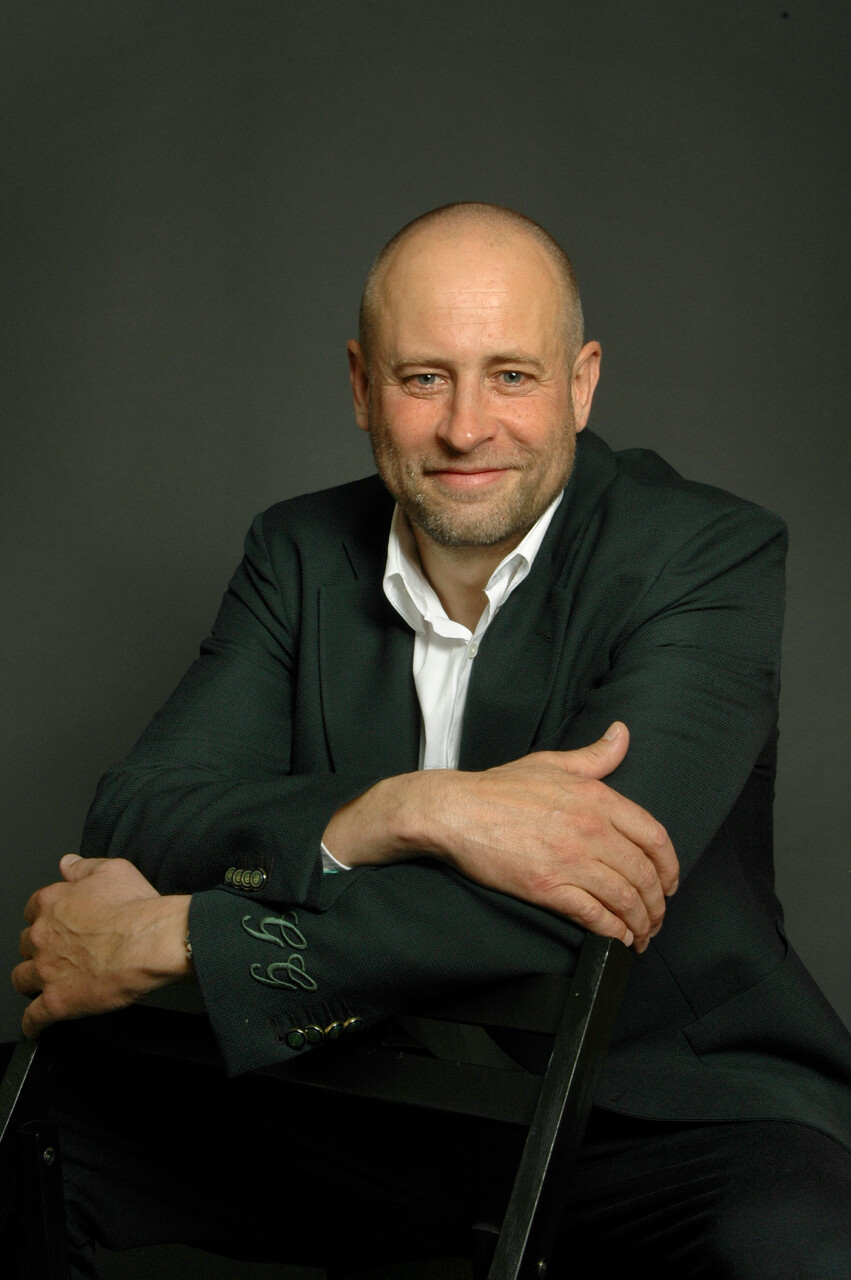
Lars Gottschligg
Main partner in Germany
- Managing Director, I-Kubus GmbH
- Owner of the Quedlinburg building since 2014
- Vorstand (executive board), SSC hydrovent AG
Carries delivery and local relationships in Quedlinburg.
The brand and how it growsOne brand. One company per building.
12 Elements Ltd stands behind the brand, holds the intellectual property and pays for the engineering. Every campus sits in its own project company, and that is where client and investor capital goes – into the SPV, never into the holding.
A flagship campus and a repeatable network of small nodes.
Europe's programme is decentralised by design: small sites next to the load, on clean power, with the heat used where it falls. The Black Vault network target is one hundred of them over five years; it is a target, not a count of operating sites.
100
Black Vault network target · data centres in Germany and Europe
Target: 100 in five years · two sites under development · as of 08/2026
Land
Control of the parcel, its registered geometry, and what the ground can carry.
The twelve things a site is made of.
Every site is assessed against the same twelve. They are the working list an engineer goes through, in order, before anything is drawn.

- 01
Land
Control of the parcel, its registered geometry, and what the ground can carry.
- 02
Water
What is available, at what temperature, and under whose permit.
- 03
Energy
What the network operator will commit to in writing, and by when.
- 04
Structure
What stands, what can be re-used, and what has to be built.
- 05
Cooling
The circuits, the rejection path, and the fallback when the source fails.
- 06
Heat
Where the waste heat goes, and who has agreed to take it.
- 07
Signal
Two physically separated fibre routes and a measurable latency.
- 08
Compute
Density class, containment and rack count, counted off the drawing.
- 09
Security
One entrance, a defensible perimeter, and no permanent workplace in a machine room.
- 10
Control
How the building is run, supervised and evidenced.
- 11
Jurisdiction
Whose law reaches the data, and whose does not.
- 12
Time
The schedule the other eleven are held to, and the one thing none of them can buy.
Origin of the name
- Granite
- Water
- Fire
- Sun
- Wind
- Air
- Atom
- Silicon
- Code
- Steel
- Law
- Time
Engineering philosophySeven rules we are willing to be held to.
Observationdrawingsystemmachine
Sitemeasurementengineeringinfrastructure
- I
Build on what cannot move.
- II
Source water carries part of the load a cooling tower would.
- III
The deepest layer is the legal one.
- IV
Liquid is the only honest answer at AI densities.
- V
The waste heat belongs to the city.
- VI
Every figure carries its status and its source.
- VII
Refuse the easy shortcut. Friction is the filter.
On the groundEvery project needs these signatures.
- Signed
- In progress
The town, the grid operator, the utility, the state energy agency and the owner of the building: the counterparties a project in the Harz cannot be built without. Each is named here only once there is a document or an application behind the name.
The site municipality
Letter of intent signed
SSC hydrovent AG
H2 energy park, Harz
I-Kubus GmbH
Owner and developer of the Quedlinburg building
Avacon Netz
110 kV grid connection application submitted
The municipal utility
Heat concept in discussion
LENA · Landesenergieagentur Sachsen-Anhalt
In contact
Governance & data roomWhat a qualified party can ask to see.
Risk, compliance, project controls, procurement and reporting, as we actually run them. Stated as practice rather than as certification – nothing here claims a standard we do not hold.
- Confidentiality
- Mutual NDA before any site-specific or commercial material moves. Counterparty documents are held separately per transaction.
- KYC / AML
- Beneficial ownership, source of funds and sanctions screening on every counterparty, before terms rather than after.
- Responsible investment
- Land, grid and water are the shared resources here. Each is assessed on what it costs the region, not only what it costs us.
- Counterparty diligence
- Legal, technical and financial review by external advisers. We do not mark our own homework on an acquisition.
- Data protection
- GDPR, and the tenant's data is the tenant's. Operator access is defined in the lease rather than assumed.
- Transaction governance
- Defined mandate, documented approvals, one SPV per asset. Risk stays where it is created.
Data room
Access to restricted documentation is available to qualified parties, on request, after an NDA.
Nothing on this page or in the data room is an offer of securities.